


The Complete Guide to Helium Leak Testing: Detection Methods, Equipment, and Acceptance Criteria for Semiconductor & Pharma Systems
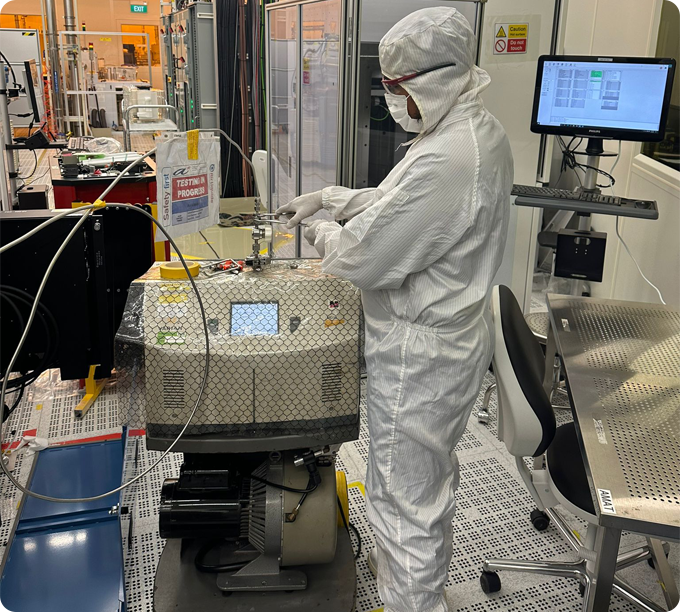
Part 1: What Is Helium Leak Testing and Why Does It Matter?
Helium leak testing is the most sensitive commercially available method for detecting leaks in sealed systems, gas distribution pipework, and pressure vessels. It uses helium as a tracer gas in combination with a mass spectrometer detector to identify leaks at rates as low as 1 × 10⁻¹² mbar·l/s, a sensitivity that no other industrial leak detection method can match.
For semiconductor fabrication facilities and pharmaceutical manufacturing plants, helium leak testing is not an optional quality check. It is a fundamental requirement for ensuring that ultra-high purity (UHP) gas distribution systems are free from leaks that could allow atmospheric contaminants (moisture, oxygen, nitrogen, and particulates) to enter the process gas supply.
The Cost of Undetected Leaks
In semiconductor manufacturing, process gases are delivered at purity levels of 99.999% (5N) or higher. A single undetected leak in a gas distribution line can introduce moisture or oxygen at parts-per-billion (PPB) levels, which is sufficient to:
- Cause defects in thin-film deposition, etching, and diffusion processes.
- Reduce wafer yield and increase scrap rates.
- Trigger costly production shutdowns for investigation and remediation.
- Compromise the integrity of gas purity verification performed during commissioning.
Understanding Minimum Detectable Leak in Helium Testing
Why Helium?
Helium is the tracer gas of choice for high-sensitivity leak detection for several important reasons:
- It is chemically inert; it does not react with system materials, process gases, or products.
- It is non-toxic and non-flammable, making it safe to use in all industrial environments.
- It is present in ambient air at only approximately 5 parts per million (ppm), which provides a very low natural background and minimises the risk of false positive readings.
- Its small atomic diameter (0.26 nm) allows it to penetrate through the smallest leak paths, ensuring that even micro-leaks are detected.
- Detection via mass spectrometry is unequivocal: the helium signal cannot be confused with other gases.
For these reasons, helium leak testing has become the industry standard for system integrity verification in semiconductor, pharmaceutical, and high-purity gas applications worldwide.
Part 2: Inboard (Vacuum) vs Outboard (Sniffer) Testing Methods
There are two fundamental approaches to helium leak testing, each suited to different system configurations and sensitivity requirements. Selecting the correct method is critical for achieving meaningful test results.
Inboard Testing (Vacuum Method)
How it works: The system under test is evacuated (pumped down to vacuum), and the leak detector is connected directly to the system. Helium is then applied externally, either by spraying individual joints and welds, or by enclosing the entire component in a helium-filled bag or chamber. Any helium that enters the system through a leak is drawn into the mass spectrometer and measured.
Detection sensitivity: < 1 × 10⁻⁹ atm cm³/sec
Advantages:
- Highest possible sensitivity, as the detector operates in its optimal vacuum configuration.
- Capable of pinpointing individual leak locations when helium is sprayed on specific joints.
- The standard method for new installation qualification in semiconductor and pharmaceutical facilities.
- Directly measures the actual leak rate, providing quantitative data for acceptance criteria evaluation.
Limitations:
- Requires the system to be capable of holding vacuum.
- Pump-down time can be significant for large systems.
- Not practical for systems that cannot be isolated or evacuated.
Outboard Testing (Sniffer Method)
How it works: The system is pressurised with helium (or a helium/nitrogen mixture). A sniffer probe connected to the leak detector is then moved along the exterior of the system, scanning welds, fittings, valves, and mechanical connections. The probe draws in a small sample of ambient air, and if helium is escaping from a leak, the detector registers a signal.
Detection sensitivity: < 5 × 10⁻⁶ atm cm³/sec
Advantages:
- Practical for large installed systems, pressure vessels, and sealed chambers.
- Faster setup time compared to vacuum testing.
- Effective for maintenance checks and post-repair verification.
Limitations:
- Lower sensitivity compared to vacuum (inboard) testing.
- Detection is affected by air currents, ventilation, and helium background levels.
- Probe scanning speed must be carefully controlled to avoid missing small leaks.
Choosing the Right Method
| Factor | Inboard (Vacuum) | Outboard (Sniffer) |
| Detection Limit | < 1 × 10⁻⁹ atm cm³/sec | < 5 × 10⁻⁶ atm cm³/sec |
| System Requirement | Must hold vacuum | Must hold pressure (≥15 PSI) |
| Leak Localisation | Excellent (spray method) | Good (probe scanning) |
| Setup Complexity | Higher (pump-down required) | Lower (pressurise and scan) |
| Best For | New installations, critical welds | Installed systems, maintenance |
| Typical Duration | 2–8 hours | 2–8 hours |
In many semiconductor fab construction projects, both methods are employed at different stages: inboard testing during initial system qualification, and outboard testing for subsequent maintenance or modification verification.
Part 3: Equipment: Agilent, Inficon, and Varian Leak Detectors Compared
The performance of a helium leak test is directly dependent on the quality and calibration of the mass spectrometer leak detector used. The following instruments represent the industry standard for semiconductor and pharmaceutical gas system testing.
Agilent MD30 MSLD
Detection sensitivity: < 1 × 10⁻¹⁰ atm cm³/sec
The Agilent MD30 is a high-performance portable leak detector widely used in semiconductor fabrication environments. It offers rapid response times and stable baseline readings, making it well-suited for high-throughput testing during fab construction projects where multiple weld joints and connections must be tested efficiently.
Inficon UL1000Fab
Detection sensitivity: < 2 × 10⁻¹⁰ atm cm³/sec
The Inficon UL1000Fab is specifically designed for semiconductor applications. It features automated test protocols, cleanroom-compatible construction, and an intuitive interface that supports standardised testing procedures across multiple technicians. Its design prioritises repeatability and documentation, which are critical requirements in regulated manufacturing environments.
Varian VSMD302
Detection sensitivity: < 5 × 10⁻¹⁰ atm cm³/sec
The Varian VSMD302 is a reliable workhorse instrument with a proven track record in industrial leak testing. It offers solid performance across a wide range of applications and is valued for its durability in field conditions.
Equipment Comparison Summary
| Model | Sensitivity | Key Strength | Typical Application |
| Agilent MD30 | < 1 × 10⁻¹⁰ | Fast response, portability | High-throughput fab testing |
| Inficon UL1000Fab | < 2 × 10⁻¹⁰ | Semiconductor-optimised, automated | Cleanroom-grade qualification |
| Varian VSMD302 | < 5 × 10⁻¹⁰ | Reliability, field durability | General industrial testing |
Calibration Requirements
Regardless of the instrument used, all helium leak detectors must be calibrated using NIST-traceable permeation-type calibrated leak standards. Calibration should be performed:
- At the start of each testing session.
- Whenever the detector is relocated or subjected to significant environmental changes.
The calibrated leak provides a known, constant helium leak rate that serves as the measurement reference.
Part 4: Acceptance Criteria and Industry Standards
Helium leak test acceptance criteria define the maximum allowable leak rate for a system or component to pass the test. These criteria vary by industry, application, and the specific requirements of the end user.
Semiconductor Industry
For ultra-high purity gas distribution systems in semiconductor fabrication facilities, the standard acceptance criterion is:
Maximum allowable leak rate: 1 × 10⁻⁹ atm cm³/sec
For gas distribution systems and is widely adopted by semiconductor manufacturers, gas system contractors, and equipment suppliers.
Part 5: Common Challenges and How to Overcome Them
Even with proper equipment and trained technicians, helium leak testing can encounter challenges that affect result reliability. Understanding these issues helps quality professionals interpret test results with greater confidence.
Helium Background Accumulation
When helium leak testing is performed repeatedly in an enclosed space, helium accumulates in the ambient air and raises the background level. This increases the noise floor of the detector and can mask small leaks. Mitigation requires adequate ventilation, spacing between tests, and continuous monitoring of the detector’s background reading.
Virtual Leaks
Virtual leaks are signals caused by outgassing from trapped gas volumes, contaminated surfaces, or absorbed moisture within the system, not from actual through-wall leaks. They typically produce slowly rising signals that differ from the sharp response of a true leak. Identifying virtual leaks requires experience and may necessitate extended pump-down times or bake-out procedures.
Residual Helium from Previous Tests
If a system has been previously tested with helium, residual helium trapped in dead legs, gasket interfaces, or porous materials can produce false positive readings in subsequent tests. Adequate purging and pump-down between tests is essential.
Environmental Factors
Temperature changes, air currents, and nearby helium usage (from other testing activities or welding operations) can all affect sniffer-mode readings. Outboard testing should be performed in stable environmental conditions wherever possible.
Part 6: How Helium Leak Testing Fits Into a Complete System Qualification Programme
Helium leak testing is one component of a multi-stage system integrity verification process. For semiconductor and pharmaceutical gas distribution systems, a complete qualification programme typically includes the following tests, performed in sequence:
- Pressure Testing: System pressurisation and 24-hour decay monitoring to verify that the pipework can safely hold its rated operating pressure without deformation, failure, or measurable pressure loss.
- Helium Leak Testing: Mass spectrometer leak detection to identify and quantify any fine leaks at weld joints, mechanical connections, valves, and fittings down to 10⁻⁹ atm cm³/sec.
- System Purge and Gas Purity Verification: Trace gas analytical testing to verify that moisture, oxygen, and other contaminants have been removed to the required PPB levels after system purging.
- Particle Testing: Laser particle counting to confirm that the internal cleanliness of the system meets the required particle count specification.
Each test in this sequence addresses a different aspect of system integrity. Skipping any stage leaves a gap in the qualification record that may only become apparent when process problems arise during production.
Conclusion
Helium leak testing is the gold standard for system integrity verification in semiconductor and pharmaceutical gas distribution systems. Its unmatched sensitivity, quantitative measurement capability, and the inert nature of the tracer gas make it the only reliable method for verifying that ultra-high purity gas systems are free from leaks that could compromise process quality.
Understanding the detection methods available, the equipment options, the acceptance criteria applicable to your industry, and the practical challenges that can affect test results empowers engineers and quality managers to specify, evaluate, and interpret helium leak testing with confidence.
Whether you are commissioning a new fab, qualifying a pharmaceutical gas system, or verifying a repair, partnering with an experienced helium leak testing service provider with the right equipment, qualifications, and industry experience is the foundation of a reliable system qualification programme.
